Mastering the Mini Michigan Goal: The Ultimate Skill at Nova Hockey
In the world of modern field hockey, the evolution of 3D skills has changed the game completely. Among the most flashy and effective techniques trending globally—and specifically highlighted by Nova Hockey—is the Mini Michigan Goal. If you are a budding hockey player in India looking to elevate your goal-scoring prowess, this skill is your ticket to the elite level.
What is the Mini Michigan Goal?
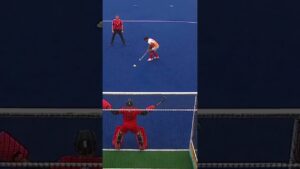
Inspired by the famous “Michigan” move in ice hockey, the Mini Michigan in field hockey involves a precise lift and carry of the ball on the stick’s hook, allowing the player to maneuver it through the air. At Nova Hockey, this skill is refined into a compact, quick-fire version designed to beat goalkeepers at the near post or over the kicker’s pads.
While traditional Indian hockey is known for its legendary wrist work and “magic” dribbling, the Mini Michigan adds a modern 3D dimension that makes a player unpredictable inside the ‘D’.
Why Every Indian Hockey Player Needs This Skill
India has a rich heritage in field hockey, but the international game now demands high-speed aerial execution. Here is why the Mini Michigan is essential:
- Beating Low Blocks: Many defenders in local Indian tournaments use low-tackle positions. The Mini Michigan lifts the ball over their sticks easily.
- Goalkeeper Confusion: Most keepers expect a push or a hit. An aerial “scoop-flick” like the Mini Michigan leaves them rooted to the spot.
- Crowded Spaces: When the circle is packed with players, playing the ball on the ground is risky. Lifting it into the roof of the net is often the only way out.
How to Execute the Mini Michigan: A Step-by-Step Guide
To master this skill, consistency is key. Follow these steps practiced by professionals at Nova Hockey:
1. The Grip and Stance
Keep your left hand strong at the top and your right hand slightly lower for better control. Your knees should be bent to maintain a low center of gravity.
2. The “Pocket” Placement
Place the ball in the “hook” or the curve of your stick. You aren’t hitting the ball; you are “cupping” it. This is where the 3D magic begins.
3. The Fluid Lift
Using a swift motion of the wrists, roll the stick under the ball and lift it upwards. In the “Mini” version, you don’t need a high lift—just enough to clear the keeper’s shoulder or the defender’s stick.
4. The Finish
Direct the ball toward the top corners of the goal. At Nova Hockey, coaches emphasize the follow-through to ensure the ball doesn’t drop prematurely.
Conclusion
The Mini Michigan Goal is more than just a trick shot; it is a clinical finishing tool. As Indian hockey continues to rise on the world stage, mastering these 3D skills at places like Nova Hockey will set you apart from the competition. Remember, the difference between a good player and a great one is the ability to execute the unexpected. Start practicing your Mini Michigan today and watch your goal tally soar!
Frequently Asked Questions (FAQs)
1. Is the Mini Michigan goal legal in field hockey?
Yes, as long as the ball is not lifted dangerously into an opponent. In a goal-scoring situation, lifting the ball into the net is perfectly legal and a highly effective skill.
2. What age is best to start learning 3D skills?
Once a player has mastered basic ball control (usually around ages 10-12), they can start practicing basic lifts and eventually the Mini Michigan.
3. Do I need a special stick for this skill?
While any composite stick works, sticks with a “Low Bow” or “Extra Low Bow” profile make it much easier to pick up and carry the ball for 3D skills.
4. Where can I see the Mini Michigan in action?
You can follow Nova Hockey on social media platforms like Instagram and YouTube using the hashtags #hockey and #fieldhockey to see professional demonstrations of this skill.
5. How can Indian players improve their wrist strength for this move?
Traditional Indian “dribbling squares” and using a slightly heavier training stick for practice can help build the forearm and wrist strength required for elite 3D skills.