Incredible Hockey Trickshot: You Won’t Believe This Angle! 🤯
In the world of sports, there are moments that leave spectators rubbing their eyes in disbelief. Recently, a viral video titled “Incredible Hockey Trickshot: You Won’t Believe This Angle!” has been taking social media by storm, especially among sports enthusiasts in India. While India is traditionally a field hockey powerhouse, the sheer athleticism and technical wizardry displayed in ice hockey trickshots are capturing a brand-new audience.
What makes this specific #Shorts video so special? It’s all about the physics of the “impossible angle.” Let’s dive into what makes this trickshot a masterclass in precision and why it has become a trending sensation.
The Anatomy of a Perfect Trickshot
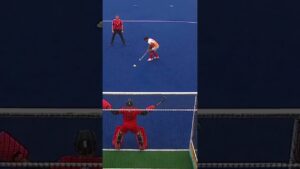
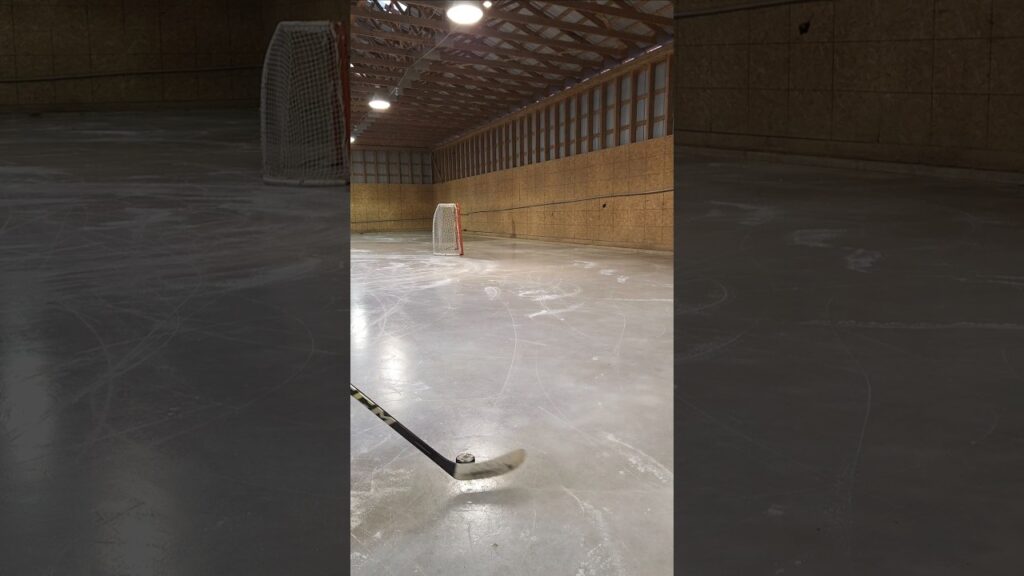
Hockey—whether played on ice or on a field—is a game of split-second decisions. However, a trickshot is different. It is a choreographed display of absolute control. In the viral clip, the player approaches the goal from an angle that seems mathematically impossible. Positioned almost parallel to the goal line, the player uses a flick of the wrist to send the puck (or ball) spinning into the top corner.
For Indian viewers used to the “reverse hit” or the “drag flick” in field hockey, seeing these skills adapted with such flair on ice is fascinating. The trickshot relies on three main factors:
- The “Hook” Motion: How the player uses the curve of the stick to generate spin.
- Spatial Awareness: Knowing exactly where the goal stands without looking directly at it.
- The Element of Surprise: Changing the trajectory at the very last millisecond to beat the keeper.
Why Hockey Trickshots are Trending in India
With the rise of platforms like YouTube Shorts and Instagram Reels, Indian youth are consuming high-octane sports content more than ever. Even though ice hockey is primarily played in the Himalayan regions like Ladakh and Himachal Pradesh, the technical skills translate universally.
Videos tagged with #hockey and #trickshot are gaining traction because they offer “snackable” entertainment. You don’t need to know the complex rules of the game to appreciate someone hitting a target from behind the net or from a zero-degree angle.
The Skill Behind the “Impossible Angle”
In the video, the “impossible angle” refers to the narrow window of space available to score. When a player is positioned near the corner boards, the visible gap in the net is often less than a few inches wide. Scoring from here requires extreme accuracy. This isn’t just luck; it’s the result of thousands of hours of practice. Professional players use their peripheral vision and muscle memory to “feel” the goal’s location.
Conclusion
The “Incredible Hockey Trickshot” is more than just a 15-second clip; it’s a testament to human skill and the beauty of sports. Whether you are a fan of field hockey or a newcomer to ice hockey, such moments of brilliance transcend the sport itself. As these videos continue to go viral, they inspire a new generation of Indian athletes to pick up a stick and experiment with their own “impossible” shots.
Frequently Asked Questions (FAQs)
1. What is an “impossible angle” in hockey?
An impossible angle usually refers to a position on the ice or field that is almost level with the goalposts, leaving virtually no visible space to score a direct goal.
2. Is ice hockey played in India?
Yes! Ice hockey is very popular in regions like Ladakh, Shimla, and Kashmir. India also has a National Ice Hockey Team that represents the country in international tournaments.
3. How can I learn to do hockey trickshots?
Mastering trickshots requires start with basic stick-handling and puck control. Once you have a strong foundation, you can practice specific maneuvers like the ‘Michigan’ or ‘top-shelf’ shots by watching slow-motion tutorials.
4. Why did this hockey video go viral?
The combination of high-speed action, a seemingly impossible goal, and the short-form video format (#Shorts) makes it highly shareable and engaging for a global audience.
5. Are field hockey and ice hockey skills the same?
While the rules and surfaces differ, the core skills such as hand-eye coordination, balance, and spatial awareness are very similar, making it easy for fans of one to appreciate the other.